
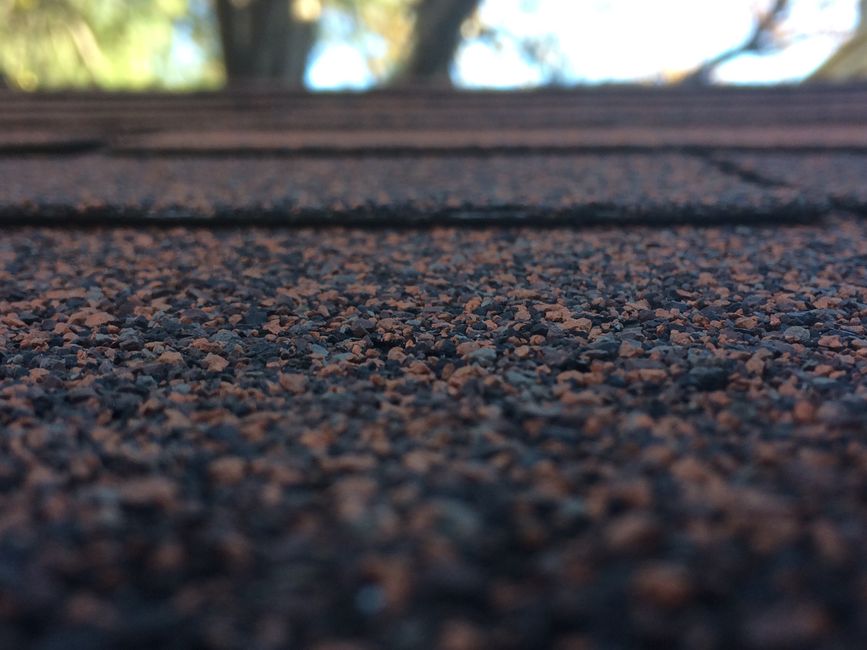
Hail can damage a roof without creating an obvious leak. In Liverpool, NY, a storm may leave behind small dents, loosened protective granules, cracked shingles, or damage to metal components that becomes more serious after repeated rain, wind, and freezing temperatures.
Knowing what to look for can help residents distinguish ordinary roof aging from storm-related damage. A safe ground-level inspection is useful, but roof surfaces should not be walked on unless conditions are stable and the person inspecting them is properly equipped.
What does hail damage look like on a roof?
Hail damage often appears as small, irregular marks where the impact has bruised, cracked, or removed part of the roofing material. The evidence may be subtle at first.
On asphalt shingles, common signs include:
- Dark spots where protective granules have been knocked away
- Shingles that look bruised, soft, or slightly depressed
- Small cracks extending outward from an impact point
- Exposed asphalt beneath missing granules
- Shingles that appear uneven compared with nearby sections
- Loose or displaced tabs after a storm with strong wind
A hail strike does not always produce a round hole. Hailstones may strike at an angle, hit an already weakened shingle, or damage the underlying mat without leaving a dramatic mark.
Where should homeowners look first?
The most useful inspection areas are the roof slopes, edges, and roof-mounted components that face the direction of the storm. Damage may be more concentrated on one side of the roof than another.
From the ground, look for:
- Shingles with noticeably different color or texture
- Patches of missing granules in gutters or downspouts
- Bent or dented metal flashing
- Damaged vents, pipe collars, skylight frames, or chimney caps
- New pieces of roofing material in the yard
- Water stains on ceilings or upper walls
- Sagging gutters or dents in metal siding, if present
Granules in gutters do not prove that hail caused the loss. Older shingles naturally shed granules, especially after years of exposure. However, a sudden increase in dark, coarse material after a severe storm can justify a closer inspection.
How can hail damage be distinguished from normal roof aging?
Age-related wear usually develops gradually and affects broad areas of the roof. Hail damage is more likely to appear as scattered impact points, often with irregular spacing and concentrated exposure on one or two slopes.
Normal aging may include:
- General fading across most of the roof
- Widespread granule loss
- Curling or cracking along many shingle edges
- Brittle surfaces
- Algae or discoloration that does not affect the shingle structure
Hail damage tends to be more localized. A shingle may look generally intact but feel soft at a specific impact point. Small fractures may also be visible around the center of a strike.
A common misconception is that every dent is hail damage. Manufacturing defects, foot traffic, falling branches, thermal movement, and installation problems can produce similar marks. The pattern, location, age of the roof, and timing of the storm all matter.
Can hail damage cause leaks immediately?
Sometimes, but not always. Hail can create an immediate opening, especially around flashing, vents, skylights, or already vulnerable areas. More often, it weakens the shingle surface and shortens the material’s ability to resist water.
A roof may remain dry for several weeks because:
- The damaged area is on a lower-exposure slope
- Underlayment is temporarily limiting water entry
- The storm was followed by dry weather
- Water is entering only during wind-driven rain
- The damage is near a penetration or flashing detail rather than the center of the roof
Pay attention to new ceiling stains, damp insulation, musty odors, peeling paint, or water marks around upper-floor walls. In areas with snowy winters, a weakened roof can also become more vulnerable when repeated freeze-thaw cycles expand small cracks.
What should be checked besides the shingles?
Hail can damage more than the visible field of the roof. Metal and plastic components may show impact marks even when shingles are difficult to evaluate.
Inspect, from a safe location:
- Ridge vents and other roof vents
- Metal flashing around chimneys and walls
- Plumbing vent boots
- Skylight frames and covers
- Gutters and downspouts
- Exterior trim, siding, window screens, and painted surfaces
Damage to several exterior surfaces after the same storm can help establish that hail reached the property. However, matching dents alone do not determine whether the roof requires repair or replacement.
Is it safe to inspect the roof after a storm?
A roof inspection can be dangerous when shingles are wet, loose, steep, icy, or covered with debris. Walking on the roof may also worsen existing damage or dislodge granules from older shingles.
A safer first step is to examine the roof from the ground using binoculars. Check the attic only if it can be reached safely and has adequate ventilation and stable flooring. Look for daylight through the roof deck, damp insulation, dripping water, or darkened wood.
After a significant storm, avoid climbing ladders in wind or on wet ground. Electrical lines, broken branches, unstable gutters, and slick surfaces can create hazards that are not visible from below.
What should be documented after suspected hail damage?
Photographs and notes are useful, especially when damage may be difficult to see later. Record the date of the storm and describe what changed afterward.
Useful documentation includes:
- Wide photos showing each roof slope
- Close photos of suspected impact marks
- Images of granules in gutters or on the ground
- Photos of dents in vents, flashing, gutters, or siding
- Interior photos of new stains or moisture
- Notes about when leaking or visible damage was first noticed
Do not clean up every piece of storm debris before documenting it. Also avoid making temporary repairs that could alter the evidence unless water is actively entering the home. If emergency protection is needed, the work should be limited to preventing further interior damage and recorded with photographs.
When does suspected hail damage need prompt attention?
Prompt attention is appropriate when the roof has an active leak, exposed underlayment, missing shingles, damaged flashing, or visible daylight from the attic. These conditions can allow moisture into insulation, roof decking, wall cavities, and finished ceilings.
Even without a leak, a roof with widespread impact marks should not be ignored. Damage may be easier to identify soon after a storm, before additional weathering, repairs, or seasonal changes make the cause less clear.
For homes in Liverpool, NY, inspections are especially useful before the colder months. Water that enters through a small weakness can freeze, expand, and gradually enlarge the damaged area. A careful assessment can determine whether the issue is isolated, storm-related, age-related, or part of a larger maintenance problem.
